

The music industry has undergone a seismic shift in the digital age. With over 600 million people worldwide subscribing to music streaming platforms like Spotify, Apple Music, and YouTube Music, streaming now accounts for more than two-thirds of the global music industry revenue. But as technology evolves, so do opportunities for fraud. One recent case highlights the dark side of this industry transformation: Mike Smith, a musician from the United States, now faces up to 60 years in prison for allegedly orchestrating a multi-million-dollar streaming fraud scheme.
Who is Mike Smith?
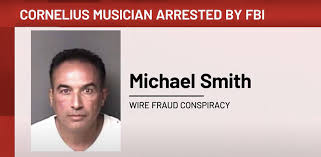
On the surface, Mike Smith seemed to be a successful artist. With over 200,000 followers on social media and collaborations with well-known musicians, his career appeared to be on the rise. However, beneath the surface, authorities allege that Smith was involved in a sophisticated scheme to exploit the music streaming model. Since 2019, this operation is said to have illegally generated over $10 million in royalties.
How Music Streaming Royalties Work
To understand the allegations against Mike Smith, it’s essential to know how musicians earn money from streaming platforms. When a listener plays a song on a service like Spotify, the platform’s advertising and subscription revenue goes into a royalty pool. Artists and their record labels are then paid a share of this pool based on the percentage of total streams their music receives. For instance, if a musician’s tracks account for 1% of all plays, they receive 1% of the royalty pool.
Given the enormous sums involved—Spotify alone paid out $9 billion to music rightsholders in 2023—it’s no surprise that some seek to manipulate the system. And that is precisely what the FBI accuses Mike Smith of doing.
The Alleged Fraud Scheme
Authorities claim that Mike Smith used artificial intelligence to generate hundreds of thousands of songs, which were then uploaded to various streaming platforms. He allegedly deployed automated bots to repeatedly play these tracks, artificially inflating their stream counts and boosting his royalty payments.
By manipulating the system, Smith is accused of diverting millions of dollars away from legitimate artists and record labels. According to FBI evidence, an email from February 2024 shows Smith allegedly boasting about earning $12 million in royalties through his scheme.
Uncovering the Scam
The first signs of trouble emerged in 2018, when Jonathan Hay, a music publicist who had worked closely with Smith, noticed unusual activity. Songs that topped jazz charts one week would vanish the next, and streams were inexplicably coming from Vietnam and Pakistan. Despite Smith’s claims that these anomalies were due to beta testing by Spotify, distribution companies like TuneCore, DistroKid, and Landr began taking down their music, citing streaming fraud.
Concerned, Hay eventually reported his suspicions to the FBI, triggering the investigation that led to Smith’s indictment.
Legal Fallout and Industry Impact
Mike Smith now faces federal charges of wire fraud, wire fraud conspiracy, and money laundering conspiracy. Each charge carries a maximum sentence of 20 years, meaning he could spend up to 60 years behind bars if convicted. Smith has pleaded not guilty to all charges, and his legal team argues that the case is unprecedented, as no one has previously been criminally prosecuted under these statutes for streaming-related conduct.
Streaming giant Spotify responded to the allegations, claiming they invest heavily in automated and manual detection to prevent fraudulent activity. However, experts warn that Smith’s case represents only the “kindergarten” level of streaming fraud. According to Andrew Batey, CEO of anti-fraud tech company Beatdapp, more sophisticated schemes remain undetected, quietly siphoning millions from the industry.
A Divided Response
Public opinion on the case is divided. Some, like Goldy Locks—a musician and former collaborator with Smith—defend him, arguing that he exposed flaws in an industry notorious for underpaying artists. She likens Smith to a “Robin Hood” figure, using technology to game an unfair system.
On the other hand, critics argue that Smith’s actions directly harmed honest artists struggling to make a living in an already competitive industry. Fraud of this scale skews the royalty pool, meaning less money for those who play by the rules.
The Future of Streaming Fraud
Regardless of how Smith’s case unfolds, it has already sent shockwaves through the music industry. If convicted, this could set a legal precedent for prosecuting streaming fraud and push platforms to adopt stricter anti-fraud measures.
For now, the industry watches closely as Mike Smith prepares to fight these groundbreaking charges in court. Whether viewed as a digital-age outlaw or a criminal mastermind, his case underscores the high stakes in the rapidly evolving world of music streaming.